
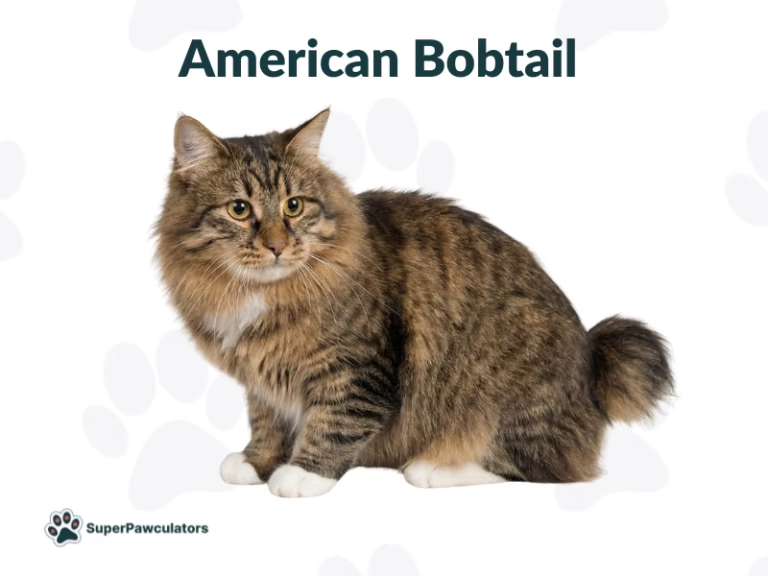
The American Bobtail is a striking and unique feline population that has emerged as one of the most naturally distinct breeds in modern domestic cat breeding. Known for its rugged, wild appearance and expressive, abbreviated tail, this breed is a manifestation of complex genetic mutations that have stabilized within the North American gene pool. Despite their “wilderness survivor” looks, these cats are remarkably affectionate and loyal, earning them the nickname of the “Golden Retriever of the cat world”. They are cherished as devoted companions who fit perfectly into diverse family environments.
Quick Facts
United States (Arizona)
9 to 14 inches
(23 – 36 cm)
7 to 20 lbs
(3.18 – 9.07 kg)
11 to 15 years
Double coat; shorthair (plush) or longhair (shaggy)
$600 – $1,200+
Moderately active
Families with children, multi-pet homes, therapy work, travelers (truckers / RVers)
HISTORY & ORIGIN
The American Bobtail is a relatively new breed that originated in the United States during the late 1960s. The breed’s development centers on a patriarch named Yodie, a brown tabby kitten with a naturally short tail discovered by vacationers John and Brenda Sanders on an Indian Reservation in Arizona. Charmed by his robust build and unique tail, the couple brought him to their home in Iowa.
Yodie eventually mated with the family’s non-pedigreed female cat, Mishi, who was a domestic colorpoint. The resulting litter contained kittens with the same shortened tails, proving that the bobtail mutation was a dominant genetic trait. Early breeders Mindy Shultz and Charlotte Bentley recognized the potential for a new breed and worked with feral bobtailed cats found across various regions of the U.S. and Canada to ensure a diverse and hearty gene pool.The International Cat Association (TICA) officially recognized the breed in 1989. The Cat Fanciers’ Association (CFA) accepted the breed for registration in 2000 and granted full championship status in 2006. Unlike several other bobtailed breeds, the American Bobtail is a product of natural selection and is not related to the Japanese Bobtail or the Manx cat.
PHYSICAL CHARACTERISTICS
Body
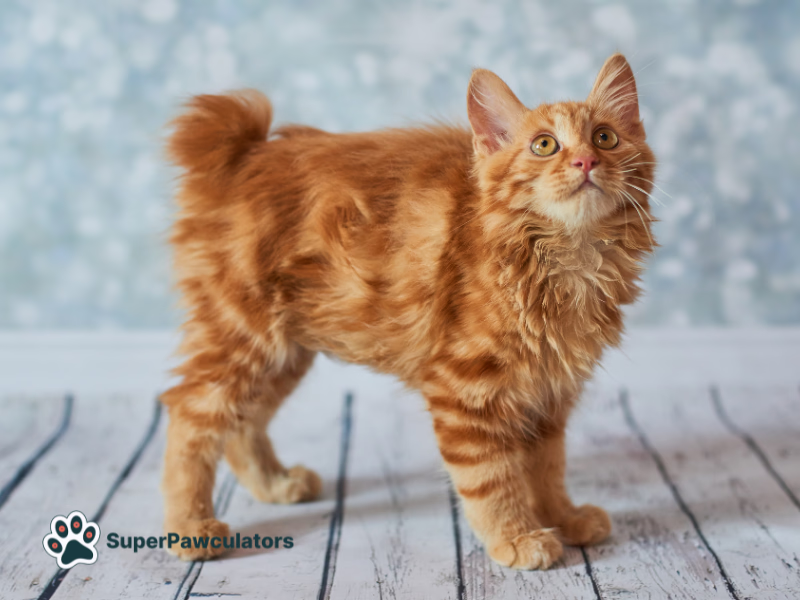
The American Bobtail is a medium-to-large, athletic animal that displays a well-muscled and solid appearance. The body is moderately long and substantial with a noticeably rectangular stance. The chest is full and broad, and the hips are substantial, almost as wide as the chest, rising slightly toward the rear due to longer hind legs.
Head
The head is a broad modified wedge in proportion to the body, featuring gently rounded contours without noticeable flat planes or doming. In adult males, widening of the head and stud jowls are apparent. The profile shows a gentle concave curve between the nose and the brow.
Ears
Ears are medium to moderately large with slightly rounded tips and wide at the base. They are set upright with a slight outward tilt. Highly desirable features include lynx tipping, furnishings, and ocelli markings.
Eyes
The eyes are large, almost almond in shape, and deep-set. They are angled toward the base of the ear and produce a characteristic “natural hunting gaze”. Eye color generally has no relationship to coat color, except in minks, sepias, and pointed patterns.
Legs & Paws
The legs are in proportion to the body with substantial boning. The hind legs are slightly longer than the forelegs, which can provide powerful bursts of speed. Paws are large and round, often featuring toe tufts in longhaired varieties.
Tail
The tail is the breed’s hallmark; it is short, flexible, and expressive. It must be at least one inch long and not extend past the hock. No two tails are identical, and they can be straight, kinked, or curved with bumps along the length. When the cat is alert, the tail is held clearly above the back.
Coat
The breed comes in two divisions: Shorthair and Longhair. The shorthair coat is medium-length, dense, and plush, resembling a rabbit pelt. The longhair coat is slightly shaggy and medium-long, with longer hair on the ruff, britches, belly, and tail. Both are double-coated and resilient to weather.
Color
The American Bobtail is accepted in any genetically possible color and pattern. Show standards favor colors and patterns that enhance the “wild” appearance, such as tabbies with intense rufousing (reddening of the ground color).
DETAILED COAT & COLORS
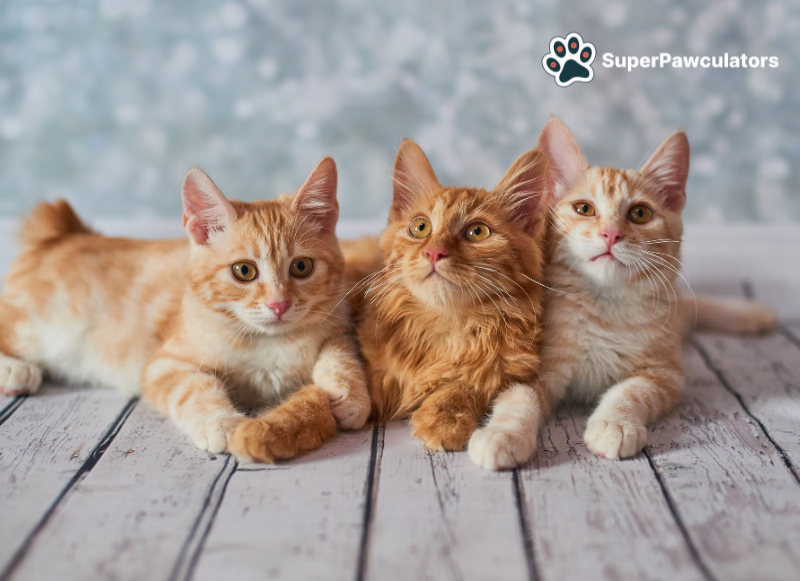
The breed variety includes every pattern imaginable, from Classic, Mackerel, Spotted, and Ticked tabbies to Solids, Smokes, and Parti-colors. Smoke patterns feature a white undercoat deeply tipped with a marking color, making the cat look solid while at rest but revealing white while in motion. Pointed, Lynx Point, and Mink patterns are also recognized, including Seal Mink, Chocolate Mink, and Blue Mink varieties. Rufous factors are highly prized in tabbies, changing drab beige tones into brilliant apricot or rich red. Buttons and lockets (small white spots) are allowed on any color or pattern without penalty.
PERSONALITY & TEMPERAMENT
Intelligence & Trainability
The American Bobtail is a highly intelligent breed that possesses the survival skills of its wild ancestors. They are easy to train and can quickly learn to walk on a leash or perform tricks like “high five”. They are also notorious escape artists, capable of opening closed doors and locked carriers.
Activity Level & Energy
These cats are moderately active; they are playful but not demanding. They enjoy daily interactive play for 30-60 minutes and are fond of climbing and jumping. Because of their strong hind legs, they are capable of leaping six feet in the air.
Social Behavior
Unlike many cats, the Bobtail attaches itself to the entire family rather than just one person. They are social, bold, and often greet visitors at the door. While not overly vocal, they communicate their pleasure using clicks, chirps, and trills.
Behavioral Quirks
Many Bobtails are fascinated by shiny objects and may act as “cat burglars,” hoarding jewelry, coins, and keys in secret stashes. They are also known to wag their short tails like dogs when happy.
Compatibility Assessment
The American Bobtail is exceptionally adaptable to various lifestyles, from quiet homes to rowdy households with children. They are highly compatible with dogs and other cats. However, due to a strong hunting instinct, they may not be ideal roommates for smaller pets like hamsters or birds.
LIFESPAN & LONGEVITY
The expected lifespan of an American Bobtail is generally between 11 to 15+ years, though some sources state they can live up to 18 to 20 years with proper care. They are slow to mature, taking between two and four years to reach their full adult size and stature.
CARE REQUIREMENTS
Nutrition
Bobtails thrive on a high-quality, meat-based diet. It is essential to feed measured meals rather than leaving food out all day to prevent obesity, as they are prone to overeating. Consultation with a veterinarian is recommended to adapt their diet to their life stage.
Grooming
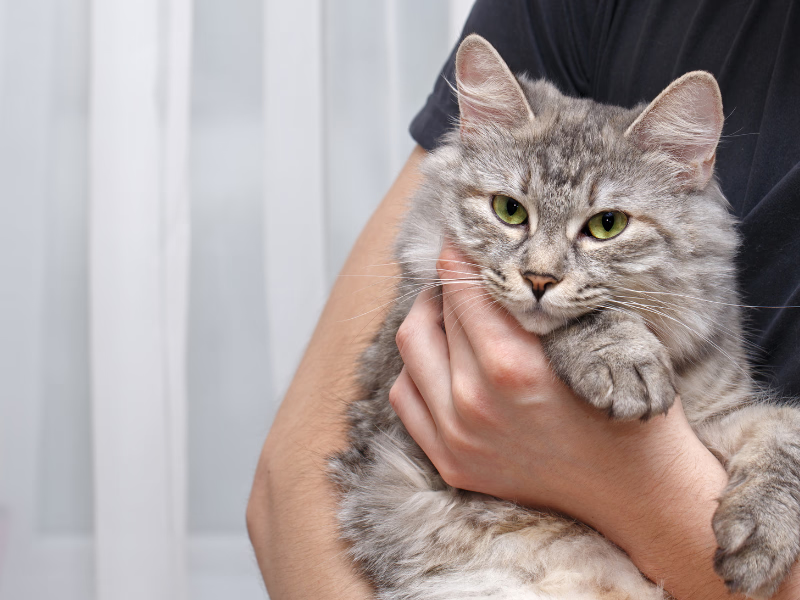
The shaggy coat is relatively low maintenance and non-matting. Brushing once or twice a week is usually sufficient to remove dead hair and skin. They tend to shed more in the spring and fall, requiring more frequent grooming during these periods. Weekly tooth brushing and regular nail trimming are also essential.
Exercise & Enrichment
To prevent boredom and mischief, Bobtails need mental challenges such as puzzle toys and interactive games. Providing climbing towers, window perches, and scratching posts helps meet their physical needs.
Environmental Needs
It is strongly recommended to keep the American Bobtail as an indoor-only cat. This protects them from outdoor dangers like cars, diseases, and predators, as well as the risk of being stolen due to their rare and desirable appearance.
Socialization
They crave company and do not like to be alone for long periods. Socializing them as kittens helps them remain friendly and self-assured with strangers.
FAQs
Are American Bobtails related to wild bobcats?
No. They are 100% domestic. Genetic testing has disproven wildcat ancestry.
Do American Bobtail tails grow as they age?
No, their tail length is determined at birth by genetics, though kittens take time to “grow into” their large ears and shaggy coats.
Are American Bobtails hypoallergenic?
No. They are heavy shedders and are not suitable for people with severe cat allergies.